


"They Killed Us." Novaya Gazeta Announces Cessation of Work in Russia
"On November 9, we will turn off the lights in our home, where we have lived for 30 years, shut down the servers, and leave," says the newspaper in a statement, which had still managed to work in Russia under extremely difficult conditions.
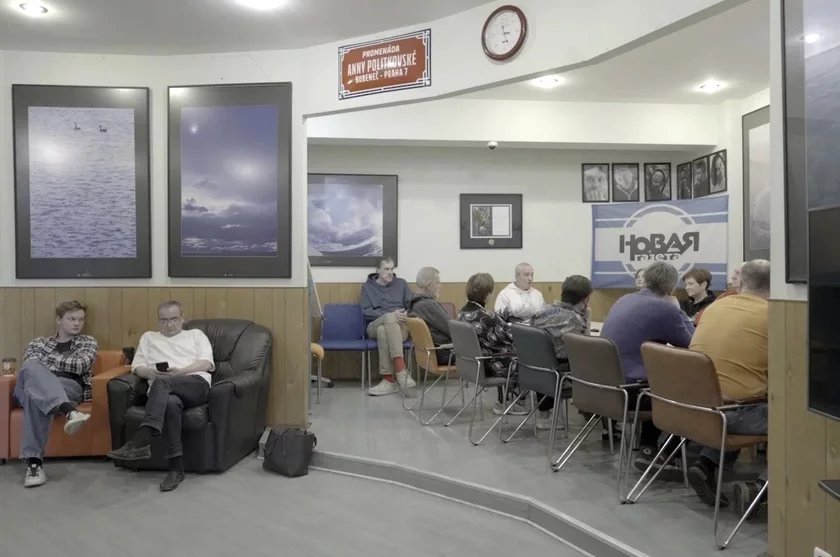
The publication "Novaya Gazeta" announced the cessation of work in Russia;
In 2023, Roskomnadzor officially annulled the registration certificate of this media outlet. This year, the Ministry of Justice recognized "Novaya Gazeta" as a foreign agent, and the publication cannot continue its activities in Russia.
"On November 9, we will turn off the lights in our home, where we have lived for 30 years, shut down the servers, and leave. The newspaper is no more. The Russian authorities and Russian special services forced the editorial office to cease operations," says the publication's statement.
"More than thirty years of life together with the country and its citizens will end for us on the street, without means of subsistence, under constant threat of repression.
Our years of life were happy — thanks to creativity and hopes, readers, friends, texts, films. Sometimes these years were desperately bitter.
Bitter, because it was during the rule of this regime, and not in the bandit 90s, for political reasons, for fulfilling their professional and civic duty, that our colleagues were killed: Igor Domnikov, Yuri Shchekochikhin, Anna Politkovskaya, Stanislav Markelov, Anastasia Baburova, Natalia Estemirova.
Simultaneously with the eviction letter, the donation system that allowed us to receive donations from our readers was disconnected. This means we were deprived of funds. Completely.
This is a coordinated action. No one will be convinced by banks' excuses that they are doing this guided by internal corporate rules. These are external rules, established by the repressive state apparatus, by FSB officers who have infiltrated every organization. They consider the country their property.
After the start of military actions, we, like all other journalists, were deprived of the opportunity to speak about the most important and tragic events of our time. Laws were adopted that brought censorship back to the country. Then this censorship spread to almost all spheres of human life.
The authorities blocked all our internet resources. The state took away our printing house, and special service officers and censors who had settled in other printing houses refused to print our newspaper. Many of our employees were forced to leave the country.
Then the state deprived us of media registration, taking away the right to earn a living through our work.
The editor-in-chief, Nobel Peace Prize laureate Dmitry Muratov, was attacked, as a result of which he almost lost his sight. A criminal case was not initiated, although the perpetrators are known.
Then our journalists began to be declared "foreign agents," starting with the editor-in-chief.
Then administrative cases were initiated against the editorial management.
In Chechnya, our columnist Elena Milashina was kidnapped and beaten almost to death.
The newspaper's managing editor Oleg Roldugin was taken hostage, accused of being a journalist. The trial is soon.
A multi-hour search was conducted at the "Novaya Gazeta" editorial office, and a search also took place at the editor-in-chief's apartment.
In September of this year, the entire editorial staff was declared "foreign agents," with more than a hundred people, including journalists and authors, added to the lists.
For almost five years of the war, we managed to work in complete encirclement by the special services.
And now — that's it. We found ourselves in the "kill zone," — writes the publication.
However, Novaya Gazeta's websites are still active.
There are "Novaya Gazeta Europe", "Novaya Gazeta Baltics".
Now reading


Nastassia Kostiugova on Statkevich's and Tsikhanouskaya's position: The proposal to «squeeze out» sounds like a proposal to wait for something unclear, and for an unclear duration


Comments