


Kuchynski — to Kastsiuhova: I want to ask you not to rewrite history
Sviatlana Tsikhanouskaya's diplomatic adviser joined a public discussion on the release of political prisoners on his Facebook page.
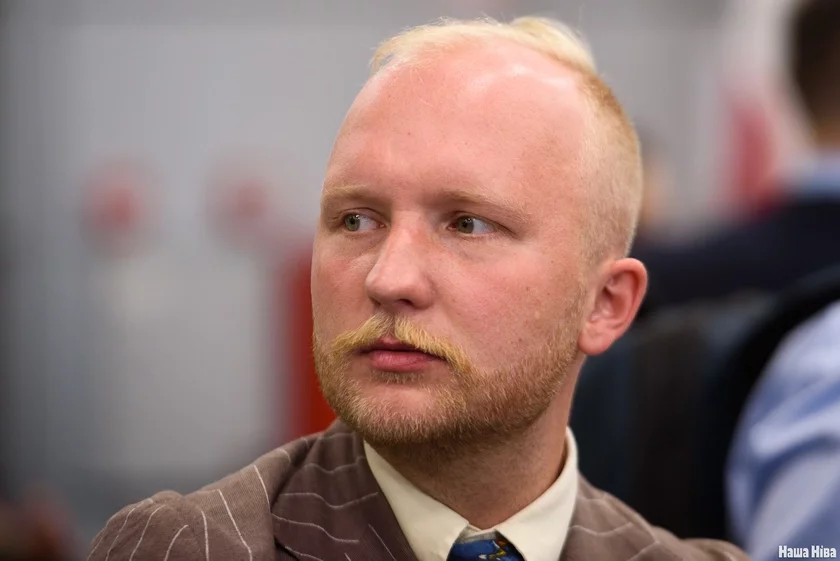
«You and I have known each other since long before 2020, and I think you know well that I have no personal malice or irritation towards you or anyone else due to differing views. We have always been able to openly discuss even the most awkward questions. Both with you and with your associates.
Therefore, I want to openly ask you not to rewrite history. Especially when it comes to the release of political prisoners and the question of who worked on it.
You write that in 2023-2024 "the issue of political prisoners faded into the background," and their release was allegedly postponed until better times - "until we defeat the regime."
I understand that you write primarily from your own feelings, including as the daughter of a former political prisoner. And if you say that at some point you felt alone with your problem, I am not going to dispute your feelings. They are absolutely understandable.
But at that time, you and some of your current associates no longer worked in the Office and, naturally, might not have known many details of our work. That's normal. And thank you for everything you did.
You write: "And the only people who came into my sight and began to actively search for ways of release were Volha Harbunova, Tatsiana Khomich, and Valer Kavaleuski." I understand that you have your own perspective, but let's look at the facts:
1. As early as December 2023, the first Strategic Dialogue between the democratic forces of Belarus and the USA took place, conducted by Sviatlana Tsikhanouskaya with Victoria Nuland and Chris Smith. The issue of political prisoners was one of the central ones. This moment became one of the important preconditions for further work, including the creation of the Coalition for the Release of Political Prisoners, whose tenth meeting took place just last week (three of its meetings also took place in 2024).
2. Speaking of 2024, let's fast forward to April. Tsikhanouskaya is invited to a meeting of G7 foreign ministers in Italy. There are conversations with US Secretary of State Blinken, Baerbock, Cameron, Séjourné, Tajani, Borrell. And one of the main topics is Belarusian political prisoners.
We specifically worked to ensure that this issue was reflected in the final documents. And on April 19, the G7 foreign ministers called for the immediate and unconditional release of Belarusian political prisoners in their communiqué. By the way, this happened just before Maria Kalesnikava's birthday. And we talked a lot then, including about her situation, conditions of detention, and the need for her release.
One can, of course, say that statements themselves do not free people. And that's true. But such decisions at the G7 level do not come out of thin air. Behind them are negotiations, work with governments, and specific political agreements. And then they can be relied upon when the conversation moves to practical steps.
This is April 2024. When, according to your version, the issue of political prisoners had allegedly already faded into the background.
3. In June, Sviatlana goes to Washington. Meetings are held at the White House with key people in the administration – advisors to the President and Vice President of the USA on National Security, Jake Sullivan and Philip Gordon. And we again discuss the topic of releasing our political prisoners.
At the State Department, we meet with John Bass and Chris Smith. Of course, Chris deserves a separate mention. Because he was one of the most important people in the entire subsequent humanitarian process. Its architect. His persistence, understanding of Belarus, and ability to move these issues within the American system played a huge role. Later, we would have a dozen more meetings with him and virtually constant, weekly communication.
4. On June 14, Sviatlana speaks at a hearing in the US Congress dedicated to Belarusian political prisoners. Meetings take place with Nancy Pelosi and American senators.
At the same time, Sviatlana receives the Democracy Service Medal from NED. Senator Shaheen, who for many years consistently raised the issue of Belarusian political prisoners before the State Department and the American administration, participates in the ceremony.
5. In the same June, at the summit of G7 heads of state and government, a separate paragraph about Belarus appears for the first time at such a high level in the final statement:
«We also condemn the ill treatment of political prisoners and ask for their immediate and unconditional release». («Мы таксама асуджаем жорсткае абыходжанне з палітычнымі зняволенымі і заклікаем да іх неадкладнага і безумоўнага вызвалення».)
This is already the level of leaders of the world's largest democratic states. And this is also the result of previous work, including the April meetings.
That is, in the first half of 2024, the issue of political prisoners is discussed at the level of the White House, State Department, Congress, and the G7. When, according to your version, the issue of political prisoners had allegedly already faded into the background.
6. In July, Sviatlana is again in Washington. Meets with Congressional leadership, including Hakeem Jeffries. We establish contacts with the teams of Rubio and Vance, because even then we understand that the situation in the autumn might change and we need to maintain support for the Belarusian cause regardless of the election results.
7. Then comes August 1.
A large international prisoner exchange between Russia and Western countries. Vladimir Kara-Murza, Ilya Yashin, and others are released. There is also a Belarusian element in the exchange - German citizen Rico Krieger, who was detained in Belarus.
But there are no Belarusian political prisoners on the lists.
I remember our expectations well. We hoped that our heroes might be included in the exchange, perhaps someone connected with the USA, maybe Ihar Losik or other journalists associated with Radio Svaboda, or other Belarusian political prisoners.
But it didn't happen.
I remember my conversation with a high-ranking White House official immediately after the exchange. It was one of my most difficult conversations with the American administration. We were genuinely disappointed, and I did not hide it.
But it was precisely after this that we began to press even more insistently: what needs to be done so that subsequent humanitarian processes no longer bypass Belarus?
8. And just a week later, an article comes out in Politico where Tsikhanouskaya openly talks about the possibility of practical agreements for the release of people.
Politico describes Tsikhanouskaya's work with the US State Department, recalls the Strategic Dialogue in December 2023, where the issue of political prisoners was one of the key ones, and writes that Sviatlana discusses possible future deals that would free members of the Belarusian opposition.
At the same time, the State Department in the same article officially confirms that dialogue with Belarusian democratic forces continues and the American side still calls for the release of political prisoners.
Note: these are not our retrospective explanations. This is the public position of Tsikhanouskaya and the State Department back in 2024. We were already openly talking about possible practical agreements that could lead to the release of people.
And therefore, when you write that the idea of humanitarian releases arose as a way "to stop linking the issue of releasing the seriously ill with the issue of political victory over the regime," I want to emphasize: we were precisely working on practical ways to release people now, not after some hypothetical victory, but, of course, not forgetting the importance of working towards systemic changes in Belarus.
9. September 2024 was particularly important.
On September 13, a meeting between Sviatlana and US First Deputy Secretary of State Kurt Campbell takes place in Vilnius.
And there we discuss not only the need to release political prisoners. We talk about possible practical negotiations with the regime, about scenarios, limitations, and what this process might look like in general.
On September 27, less than two weeks later, a second meeting with Campbell takes place, this time in Washington.
To be clear: the First Deputy Secretary of State is one of the highest officials in American diplomacy. And two lengthy meetings in two weeks are not mere courtesy, but confirmation that we were then very intensively discussing concrete details of the humanitarian track, possible steps by the US, sanctions, incentives for negotiations, and conditions under which people could be released.
I will not reveal all the details of these conversations. Not everything can be disclosed publicly yet. But I can say unequivocally: in September 2024, very intense consultations were held specifically on practical mechanisms for the release of political prisoners.
Yes, the proposals at that time differed in some details from what we saw in 2025-2026. But the very logic of the humanitarian track and the search for agreements was already formed then.
10. In November 2024, we meet Chris Smith again in Berlin. In December, I personally go to Washington, meet Chris, and also Director Michael Carpenter at the White House.
On December 5, the second round of the Strategic Dialogue between the US and the democratic forces of Belarus takes place in Vilnius, co-chaired by Tsikhanouskaya and Smith. Political prisoners, assistance to families, rehabilitation of the released, and humanitarian issues are a separate part of the conversations.
I am not even trying to list everything that happened in the European direction, where, I believe, the issue of political prisoners was raised at almost every meeting, including with Macron, Trudeau, Tusk, Metsola, and others. The Belarus-EU Consultative Group also worked.
But one thing regarding the EU and 2024 I will note separately: the International Humanitarian Fund for Assistance to Belarusian Political Prisoners was also established in 2024. Today, everyone already perceives it as something ordinary: over 3 million euros in aid, 15 European countries, real assistance to released political prisoners, their families, rehabilitation, and treatment.
But I remember well how back in 2022 we first discussed this idea and were rejected. We were told that creating a new international fund was extremely difficult, that new mechanisms, procedures, and funding were needed. And at that time, it was not possible to achieve this.
But in 2024, when practical questions of possible releases of political prisoners began to arise, when people were released after serving their terms or under other circumstances, we reactivated this work. Tsikhanouskaya went to Norway, held negotiations with the Prime Minister and the Ministry of Foreign Affairs, and in the spring, the creation of the fund was announced with the first Norwegian contribution of 10 million kroner.
I remember all these "no, it's difficult," "no, it's impossible," "it doesn't happen that fast." But it was precisely thanks to Tsikhanouskaya's persistent advocacy work and the support of Norwegian partners that the fund was nevertheless created. And today it helps hundreds of Belarusians. This is also a concrete result of the work of 2024.
Yes, after Trump's victory in the elections and during the transition of administrations, some processes slowed down for a certain period, which is logical. But there were developments, contacts, consultations, people in the American system, like Chris, who understood the essence of the matter and continued to deal with it. Therefore, the humanitarian track did not have to start from scratch later.
I will return to another one of your phrases. You write that the choice seemed to be between "reducing pressure" versus "it will somehow work out."
But this is a very simplified description of what was happening. Because in reality, we were precisely looking for ways to free people now, and not after some hypothetical victory. And at the same time, we understood that we needed to think about those who remain behind bars, about new arrests, about ensuring that each release was not accompanied by a new wave of repression.
Therefore, the discussion about sanctions and what steps can be taken in response to releases is not a choice between human life and some abstract principles. It is a complex conversation about how to achieve the release of people and at the same time not create conditions under which the regime will simply take new hostages.
And, by the way, we also discussed these issues with the Americans back in 2024. Much more was said about 2025-2026. I will only note that I was directly involved in all seven releases we are now talking about. We met with American delegations, helped organize the reception of released people, met our heroes and heroines in Vilnius, Warsaw, and Ukraine.
Therefore, for me, this is not some abstract political discussion about merits. I saw this process with my own eyes, participated in it, and personally experienced each release very deeply. Each of them was a real joy. And at the same time, pain for those who remained in captivity.
And that is precisely why I am surprised by your version of what happened leading up to these releases and who worked on them.
You very rightly write that "people are not obliged to be convenient for you to work for results."
I completely agree. And I would like this principle to work all ways.
Because Tsikhanouskaya and her team are also not obliged to be politically comfortable for anyone for our work to be recognized.
I will never claim that the release of political prisoners is the exclusive merit of Tsikhanouskaya, our Office, or any single structure. That would be untrue.
First and foremost, of course, this is the immense work of the Americans - John Cole, Chris Smith, and other administration representatives and diplomats who were directly involved in the negotiations. This is the work of senators, congressmen, European partners, human rights activists, families of political prisoners, civil initiatives. And, of course, the political prisoners themselves, whose courage and resilience prevented the world from forgetting about Belarus all this time.
But it is equally unfair to erase Sviatlana and her team from this history.
One cannot present the results of 2025-2026 as if no one did anything before that and everyone was just waiting for victory over the regime.
I can vouch for every word I say. I have documents, a chronology, public confirmations, and much more information that cannot yet be disclosed.
One can have different attitudes towards the Office and Sviatlana. One can disagree about sanctions, negotiations, strategy.
One can criticize, argue, propose other approaches. But this is no reason to pretend that all this work did not exist.
Therefore, I propose that we all respect each other's work and do not substitute facts with personal assessments.
Because in this story, what truly matters is not who gets more political dividends. What matters is that people are set free. And that we all together still have a lot to do to free the rest and prevent new ones from appearing," wrote Dzianis Kuchynski.
Now reading


"Doctor", lawyer, man with a camera and several strong guys. In Petropavlivska Borshchahivka, Russian special services took advantage of a specific Ukrainian wartime business


Comments
[Зрэдагавана]